Client engagement at 10xViz is grounded in intentionality. It’s not limited to project delivery or communication cadence. It’s a holistic process of collaboration, empathy, and strategic problem-solving designed to drive measurable outcomes and long-term value.
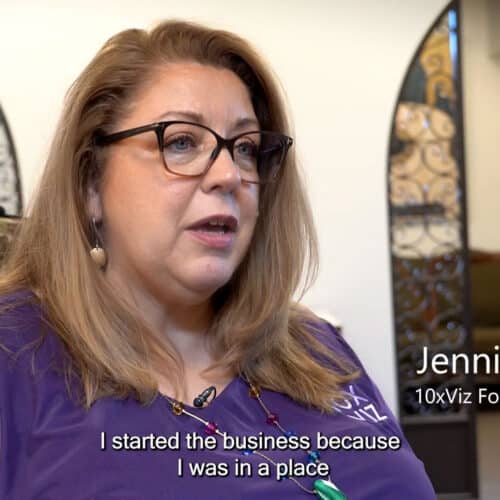
@Melissa McDonald, Client Engagement Manager at 10xViz, brings both technical acumen and consulting intuition to the table. As a Smartsheet partner and founder of her own consultancy, she understands what clients need: a partner who can listen, adapt, and co-create scalable solutions.“They’re so organized and creative in how they all work together,” she says about the 10xViz team. “It’s very refreshing to be able to bounce ideas off of the team and really share and grow together on a day-to-day and week-to-week basis.”
The value of co-creation
Projects succeed when they’re built in the context of how teams actually work. Melissa believes that the most effective solutions come from shared understanding, not just of workflows and tools, but of culture, priorities, and pain points.
“When we build with them, we’re part of their team,” she notes. “It’s just more important to have that interaction, to know their processes, to know their tools, and how they’re working, so that we are intimately familiar with what we’re building for them. And so coming alongside them, and not for them, makes all the difference.”
Rather than delivering a pre-defined solution, the 10xViz team engages clients in the process, actively collecting feedback, asking clarifying questions, and iterating together. This co-creative model produces systems that are effective and sustainable, minimizing rework and maximizing adoption.

Why listening builds trust
The first milestone in any engagement isn’t a finished dashboard or automation. It’s alignment. That alignment comes from deep listening.
“There’s so much power, so much trust, so much cooperation in listening,” Melissa adds. “It helps not just on the communication side, but in hearing what they have to say, what their pain points are, and then getting that acknowledgement that we understand.”
Melissa pays close attention to both spoken and unspoken cues in early client conversations. A vague request might indicate uncertainty. Hesitation during scope review could point to misalignment between departments. These signals inform how the team engages, guiding the path toward clarity and consensus.
Listening also helps the team see through the client’s lens. It enables them to suggest scalable solutions that match not only functional needs but also strategic priorities and organizational context.
The hallmarks of strong engagement
Client engagement becomes stronger when it’s proactive, transparent, and grounded in partnership. This means:
- Keeping communication clear and two-way
- Proactively flagging risks, blockers, or opportunities
- Setting and aligning expectations early
- Delivering small wins consistently, not just waiting for the final handoff
“We want to get ahead of any issues or blockers,” Melissa explains. “If they’re coming up on renewals, we want to get ahead of what they need to do for their accounts and for their solutions.”
This forward-looking posture reassures clients and gives them confidence that they’re not alone in managing complexity and that they have a strategic ally invested in their outcomes.
The difference between good and great engagements
A well-run project with timely delivery and solid communication is a good engagement. But great engagements go beyond that. They are marked by trust, shared ownership, and real excitement on both sides.
“With a great client engagement, we are delivering faster,” Melissa says. “We are delivering deeper. We have a deeper familiarity with each other.”
These partnerships develop a rhythm, a productive cadence where deliverables keep coming, problems are solved quickly, and each interaction brings value. Often, clients start saying things like, “This version is even better than the last one.” That’s when the engagement has entered a new phase: high trust, high velocity, and mutual momentum.
Big-picture thinking drives long-term value
One of the biggest risks in any system implementation is short-term thinking. A dashboard might work today, but what happens when the team doubles or the program expands?
“We want to see not just the beginning and the current need, but we want to think out six months, a year, a team, a project, a program, and just look at the big picture so that we’re not giving them something that’s going to have to be rebuilt or repeated for them in the near future,” Melissa adds.
Every engagement considers the lifecycle of the solution, from pilot use case to broader adoption. This ensures the client doesn’t have to rebuild or rework their systems as business needs evolve.

Client-centric engagement every step of the way
Successful engagements don’t rely on overpromising or templated answers but on trust, collaboration, and the kind of consistent delivery that builds internal champions.
“We’re helping clients every day with efficiencies and operational optimizations,” Melissa concludes. “When we can make a client happy because we solved something for them quickly, enhanced something, or reduced manual work, that just really helps us.”
Melissa’s philosophy and 10xViz’s client-first culture create an experience where solutions are co-created, challenges are tackled together, and clients walk away with tools that scale.
Looking for a consulting team that listens, collaborates, and delivers? Schedule a consultation with 10xViz today at 10xViz.com.